
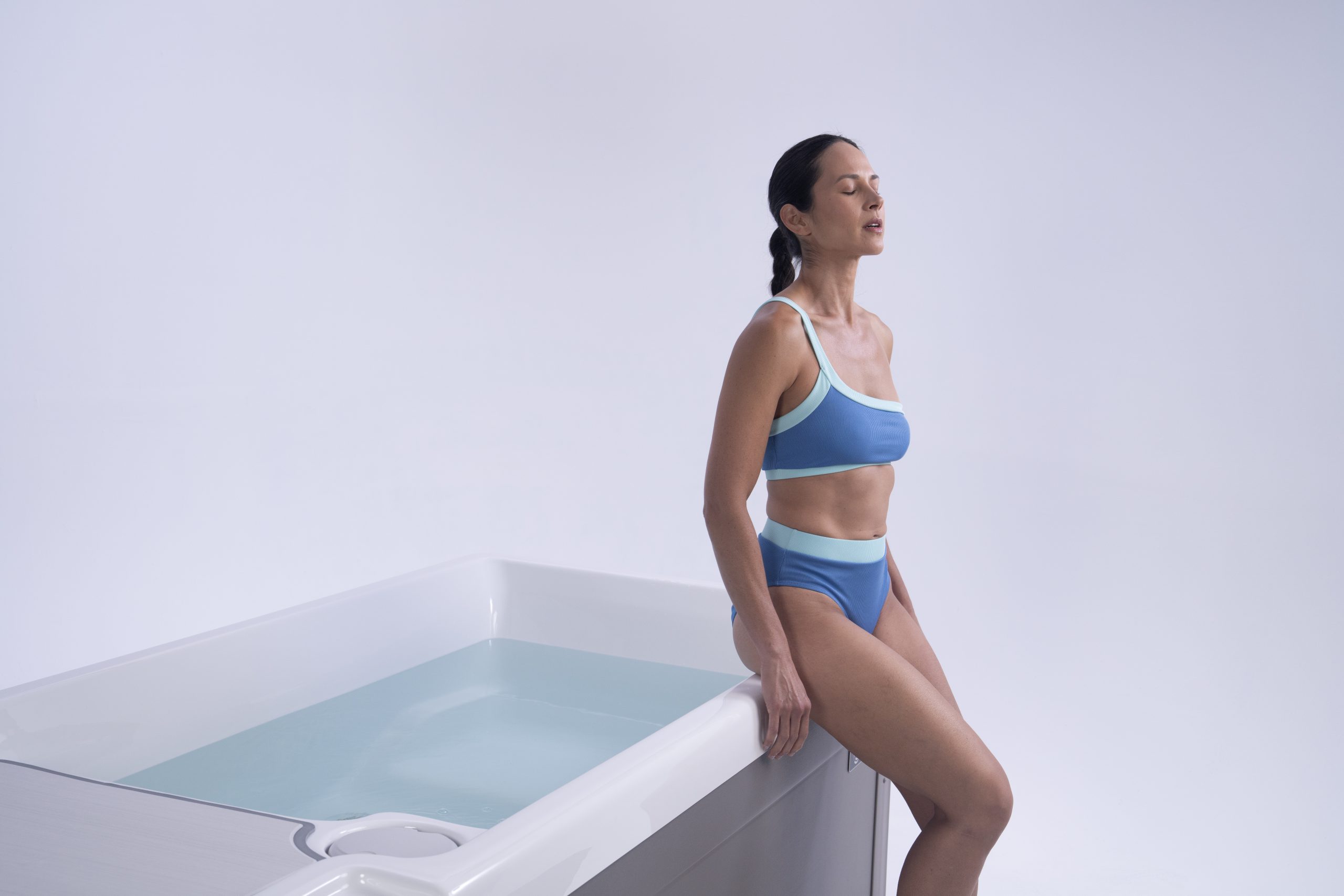
Cold plunges are everywhere right now, and plenty of people in Bakersfield have already tried the do it yourself version. A stock tank, a chest freezer conversion, or a plastic tub and a trip to the ice machine.
Then July arrives, and the thing that worked fine in March cannot hold temperature anymore. This is the most common cold plunge complaint we hear locally, and it is not user error. It is physics, and it is worth understanding before you spend money on the wrong setup.
Why hot climates break budget cold plunges
Chiller capacity versus ambient air
A chiller does not create cold. It moves heat out of the water and dumps it into the surrounding air. The hotter that air is, the harder the unit works and the less effective each cycle becomes.
Most inexpensive chillers are rated at comfortable ambient temperatures. Bring one to a valley summer, where afternoons sit above 100 degrees for weeks at a stretch and overnight lows may only reach the mid 70s, and it never gets a break. The result is a unit running constantly and still drifting into the 60s.
When you compare units, ask about the chiller’s rated capacity and how it performs at high ambient temperatures, not just the lowest temperature listed on the box. That single question separates equipment that works here from equipment that works in San Diego.
Insulation, lids, and heat gain
The other half of the problem is everything the chiller has to fight. An uninsulated shell absorbs heat from the air and from direct sun continuously. An open surface loses cold to evaporation and gains it back from the sun all day long.
This is where purpose built equipment separates itself from a converted tub. Insulated walls, an insulated lid, and a shaded location can cut the load on the chiller dramatically. A well insulated plunge in the shade with the lid on holds temperature between sessions. An uninsulated tub in the open does not, no matter what you attach to it.
What ice actually costs over one summer
The ice route deserves an honest look, because the math surprises people.
A typical ice bath session takes somewhere in the range of 20 to 40 pounds of ice to bring a tub down to a genuinely cold temperature, and in Bakersfield heat that ice disappears fast. At local bagged ice prices, daily use adds up to real money every month, plus a store run every single day and a freezer full of bags.
Run that for a full summer and the ice spend starts to look a lot like a down payment on equipment that does the job on its own. The bigger cost is consistency. Most people who rely on ice quietly stop plunging in August, which defeats the point of buying anything at all.
Placement makes a real difference here
Where you put a plunge in this climate is nearly as important as what you buy.
Shade is the first priority. A covered patio, the north side of the house, or a pergola all cut direct solar gain substantially. Second, give the chiller room to breathe. These units exhaust heat, so tucking one into a tight enclosure with no airflow means it is recycling its own hot air.
Garages are a common choice and can work, but an uninsulated Bakersfield garage in August is one of the hottest spots on the property. If that is the plan, plan for ventilation too.
Water care in a small volume of cold water
A cold plunge holds far less water than a hot tub, which means anything that goes in has a bigger effect. Sweat, sunscreen, and dust from a valley wind all concentrate quickly.
The good news is cold water is slower to grow things than hot water. You still need filtration running, a sanitizer routine, and a regular drain and refill schedule. Ask us what the interval looks like for the model you are considering and how many people will be using it, because bather load drives that more than anything else.
Pairing a cold plunge with your hot tub or sauna
Most of our cold plunge customers already own something warm, and that is not a coincidence. Alternating between hot and cold is the routine people are actually after, and having both in the same backyard is what makes it stick.
A simple starting pattern looks like a warm session in the hot tub or sauna, a short cold plunge, and then a return to warm. Start with brief cold exposure and extend it as you get comfortable rather than trying to prove something on day one. If you have any health conditions or take medication, check with your doctor before starting cold water immersion.
What to look for in specs before you buy
Four things are worth writing down before you shop:
The chiller’s rated capacity and its performance at high ambient temperatures. Whether the shell and lid are actually insulated. The filtration and sanitizing setup, since a small water volume needs it. And who services the unit locally when something goes wrong, because a warranty is only useful if somebody in town can honor it.
See the Vigor cold plunge on Yeager Way
We carry the Vigor cold plunge because it is built for real use rather than for a single cold morning in spring. Come by and we will show you the chiller specs, talk honestly about what it will hold in August, and let you see the build quality up close.
Our showroom is at 4301 Yeager Way in Bakersfield, open Monday through Friday from 10am to 6pm and Saturday from 10am to 5pm. Call 661-396-8827, check our cold plunge FAQ, or see what is running right now on our current specials page.