
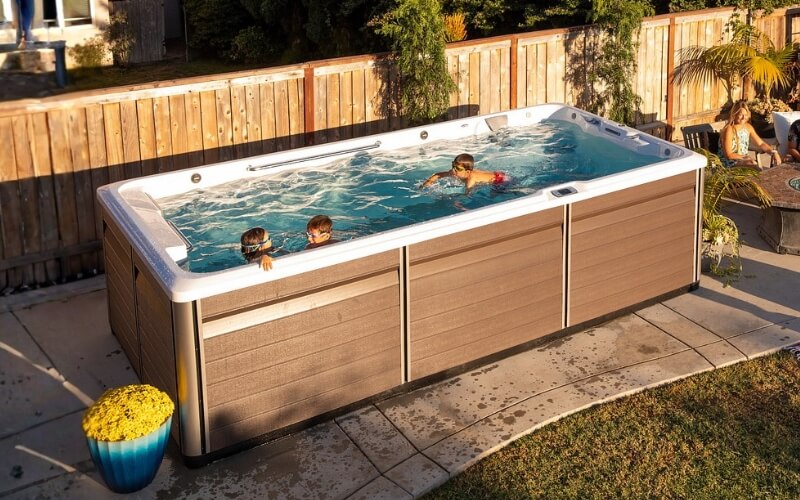
Yes, and the cooler half of the year is when a lot of owners get the most out of one. A swim spa is heated and insulated year round, so unlike a pool it does not get shut down in October and uncovered in May. What changes once nights drop into the 40s is not whether you can use it. It is the temperature you hold, how the cover earns its keep, and a few small shifts in your routine.
Where the water sits when the air cools
The useful thing about a swim spa is that the temperature is yours to set, and the right setting depends on what you are doing in it. Swimming and exercise call for cooler water, because you generate your own heat once you are moving and water that is too warm makes a workout unpleasant fast. Soaking and stretching call for something warmer.
Most owners land on a working range and adjust by a degree or two with the season rather than making big swings. If you both swim and soak, the practical approach is to pick a setting that suits the activity you do most and accept a short adjustment period for the other. Models with separate swim and spa zones, which is one of the distinctions across the Endless Pools series we carry, remove that compromise entirely by letting each end sit at its own temperature.
The cover does most of the work
In cool weather the cover stops being an accessory and becomes the main piece of equipment. Heat leaves through the water surface faster than anywhere else, so a cover that seals properly and is in good condition is what keeps the spa holding temperature without the heater working constantly.
This is the month to look honestly at yours. A cover that has taken on water is heavy, sagging in the middle, or no longer sitting flush at the edges has stopped doing its job, and in cool weather you will feel the difference. Replacement options including End2End swim spa covers are worth pricing out before the coldest stretch rather than during it.
The other cover habit that matters: close it promptly. An open swim spa surface on a cool evening sheds heat quickly, and the recovery afterward is where energy goes.
What changes in your maintenance routine
Less than you would expect, and in some ways cool weather is easier. Through a Bakersfield summer, heat and sun work against water chemistry constantly. As temperatures drop, sanitizer tends to hold better and chemistry gets more stable rather than less.
Testing and filter care stay on the same schedule. Keep an eye on water level, since you will top up less often without evaporation driving it down, and that can make a slow leak harder to notice. If the spa goes unused for a longer stretch, keep it running and heated rather than shutting it off. Circulation and filtration are what keep the water healthy, and letting it sit cold and still creates more work than it saves.
The practical side of getting in when it is cold out
The barrier to winter use is rarely the water. It is the 20 feet between the back door and the spa. Owners who use theirs year round almost always have the same things sorted: a towel and robe stored somewhere close and dry, a non-slip path, and lighting that works after dark, because at this time of year most sessions happen after sunset.
Steps and the surround matter more in cold months too. Wet surfaces plus cool air is exactly when footing becomes an issue, so take a look at the decks and steps that go around the spa if the current setup is slick.
Can you swim in a swim spa in winter?
You can. The water is heated and the spa runs year round, so winter swimming is normal use rather than an exception. Many owners keep their swim sessions more consistent in cool months than in the heat of summer.
What temperature should a swim spa be in winter?
It depends on use rather than on the season. Exercise is more comfortable in cooler water, soaking in warmer. Pick the setting that matches how you mostly use it, and adjust slightly rather than dramatically as the weather turns.
Does a swim spa cost more to run in cold weather?
Heating works harder when the air is colder, so some increase is expected. How much depends heavily on insulation, cover condition, and how often the spa sits open. A cover in good shape is the single biggest lever you have.
Do I need to winterize a swim spa in Bakersfield?
Not in the way a pool is winterized. A swim spa in regular use stays running and heated through the season. Full winterization is a step for a spa that will sit unused for an extended period, and it is worth talking through before doing it.
See one running before the season turns
If you have been weighing a swim spa and assumed it was a summer purchase, autumn is a reasonable time to look, because you can see how one behaves in cooler air rather than imagining it. Our showroom at 4301 Yeager Way, Bakersfield, CA 93313 has swim spas alongside the rest of the lineup. Call (661) 396-8827 or visit Monday through Friday from 10am to 6pm, or Saturday from 10am to 5pm. If you already own one, our swim spa service team can look at a cover or a heater before the cold sets in.