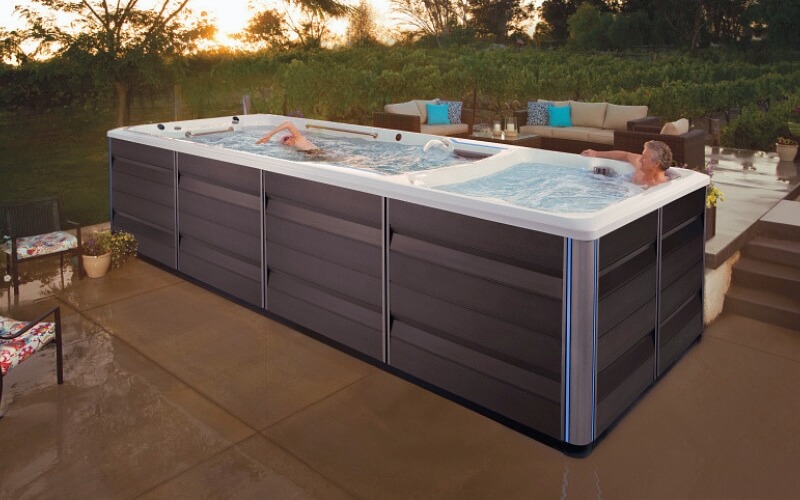
People usually arrive at this decision having already pictured one of the two, then start wondering whether the other would have been smarter. It is a fair question, because the overlap is real. Both are heated, both are jetted, both run year round, and both end up being used in the evening more often than not. The honest way to sort it is not by comparing features. It is by being specific about what you want to do in the water.
What each one is built around
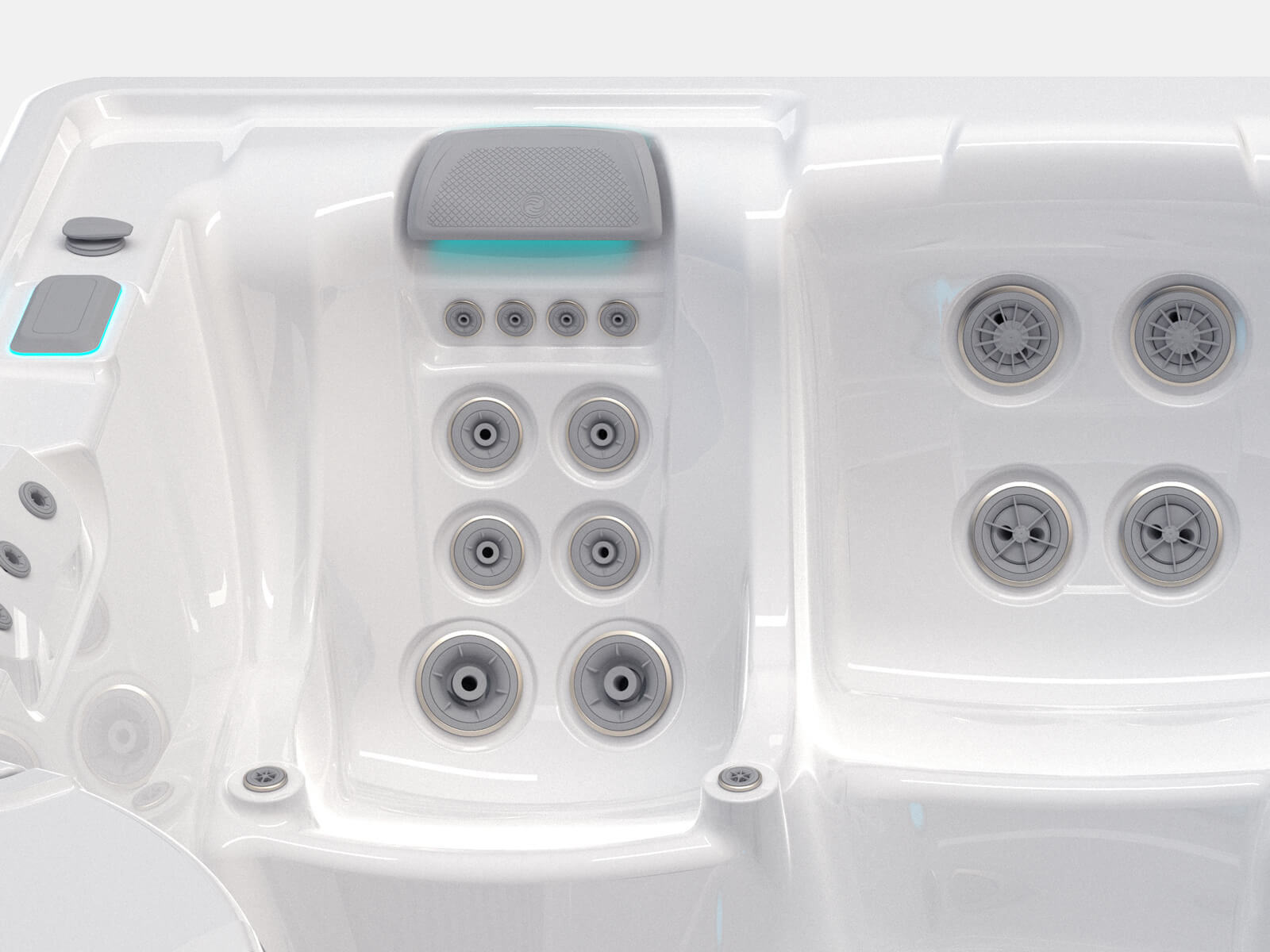
A hot tub is built for sitting. The seating is contoured, the jets are positioned for specific areas of the body, and the water is held at a temperature meant for soaking. Everything about the design assumes you are stationary and comfortable.
A swim spa is built for moving. It is a long body of water with a current generated at one end, so you can swim continuously in place, walk, or work against resistance without going anywhere. Many models also include a separate seating area, which is where the overlap between the two gets genuinely interesting.
That distinction drives everything else, including the one thing people get caught out by: temperature. Soaking wants warm water. Swimming and exercise want cooler water, because you generate plenty of heat yourself once you are moving. A single-zone swim spa makes you pick one. Dual-zone models, which is one of the differences across the swim spas we carry, hold each end at its own temperature and remove the compromise entirely.
Space, and what that really means
A hot tub fits on a patio. A swim spa needs a footprint closer to a small pool, plus clearance to get around it. Before falling for either, measure the actual space and mark it out, because the difference between the two is substantial and it is not just floor area. Delivery access matters more for a swim spa too, since there is more unit to get through a gate or over a fence.
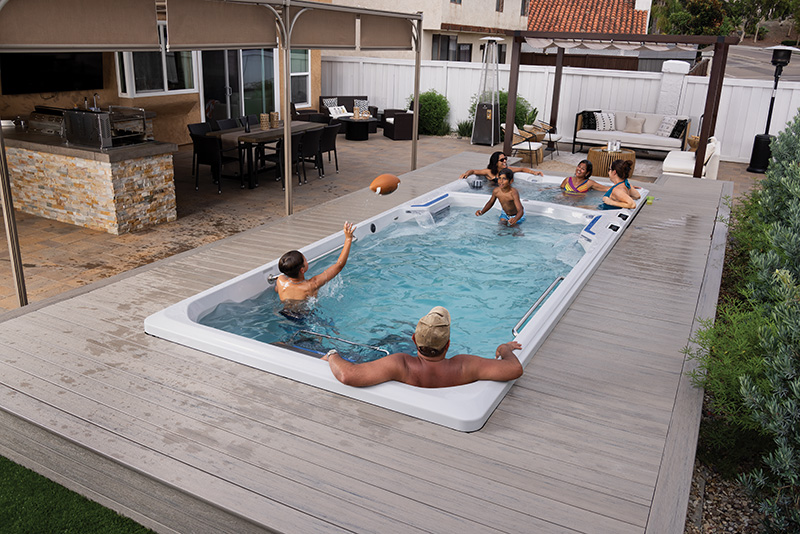
The flip side is worth saying plainly. A swim spa is a serious alternative to putting in a pool, and it occupies far less yard than one. If a pool was the original idea and the space or the commitment stopped it, that is the comparison that actually matters, and we covered it separately in our piece on swim spas versus in-ground pools.
Upkeep: more alike than different
Both need the same things. Water tested and balanced, filters cleaned, covers maintained, surfaces kept clean. The routine does not change in kind, only in scale, since a swim spa holds considerably more water. More water is slower to swing out of balance but takes more product to correct when it does.
Both are heated and insulated year round, so neither gets shut down seasonally the way a pool does. Both can also be serviced locally, which matters more over a decade of ownership than any specification on a brochure.
Who ends up happier with which
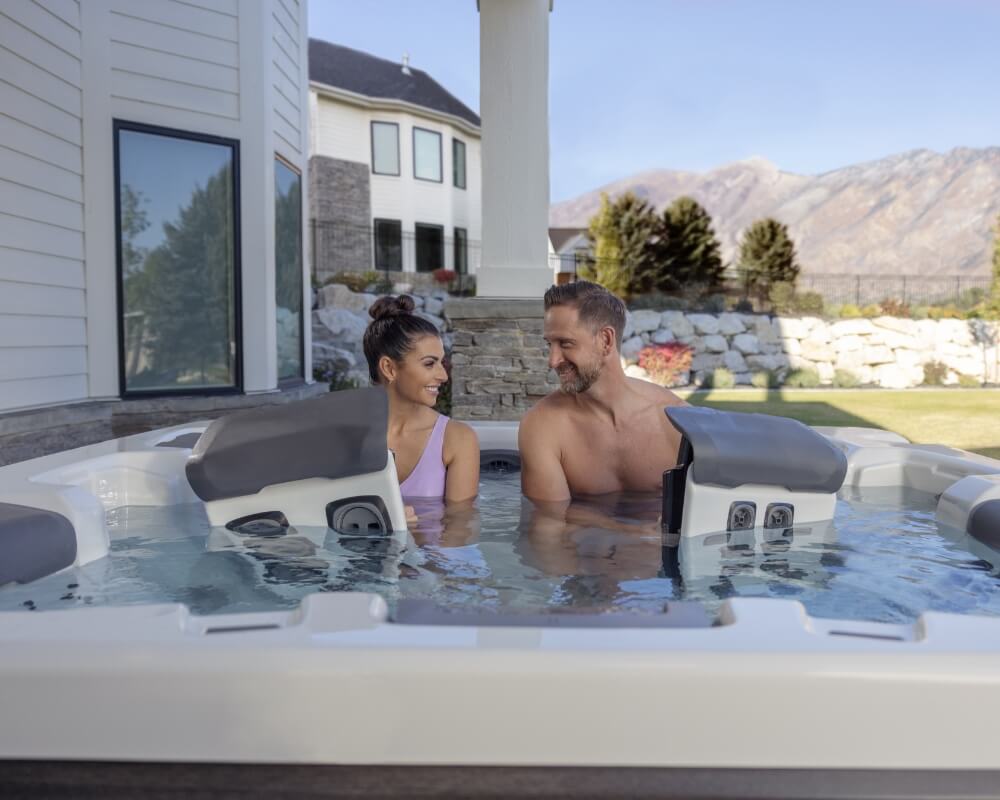
A hot tub suits people who want to end the day in warm water, who are buying it mostly for relaxation or for sore muscles after work, and who have patio-sized space. It is also the easier first purchase, since it costs less in space, setup, and ongoing attention.
A swim spa suits people who want the water to do something for them physically: lap swimming, low-impact exercise, aquatic therapy, or keeping kids moving in a pool-like space without a pool. It also suits households where one person wants to swim and another wants to soak, which is where dual-zone models earn their keep.
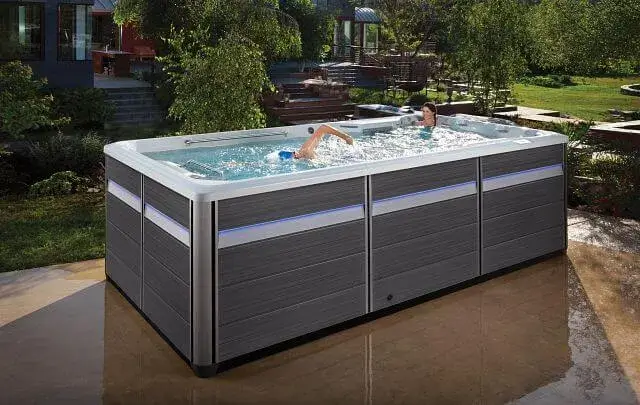
The useful question to ask yourself is what you picture doing in it on a Tuesday, not on a holiday. If the answer is sitting, get the hot tub. If the answer involves moving, the swim spa is the one you will actually use.
What is the difference between a swim spa and a hot tub?
A hot tub is designed for seated soaking at warm temperatures. A swim spa is a longer unit that generates a current you can swim or exercise against in place, often with a separate seating area, and it is typically held cooler for activity.
Can you use a swim spa as a hot tub?
You can, and many owners do. The practical limit is temperature, since one body of water can only be at one temperature at a time. Dual-zone models solve this by keeping the swim area and the seating area at separate settings.
Is a swim spa harder to maintain than a hot tub?
Not harder, just larger. The same tasks apply, testing, balancing, filter care, and cover care, across a greater volume of water. The larger volume is slower to drift out of balance and takes more product to adjust.
Which one needs more space?
A swim spa, by a wide margin. A hot tub fits comfortably on most patios, while a swim spa needs a footprint closer to a small pool plus room to move around it, and it needs wider delivery access to get into place.
Stand next to both before you choose
This decision gets easy in about five minutes once you are looking at the two side by side, and much harder if you are comparing dimensions on a screen. We have hot tubs, swim spas, saunas, and cold plunges in the same showroom at 4301 Yeager Way, Bakersfield, CA 93313. Call (661) 396-8827 or come by Monday through Friday from 10am to 6pm, or Saturday from 10am to 5pm. You can also browse our hot tubs ahead of a visit.